
 Pin it
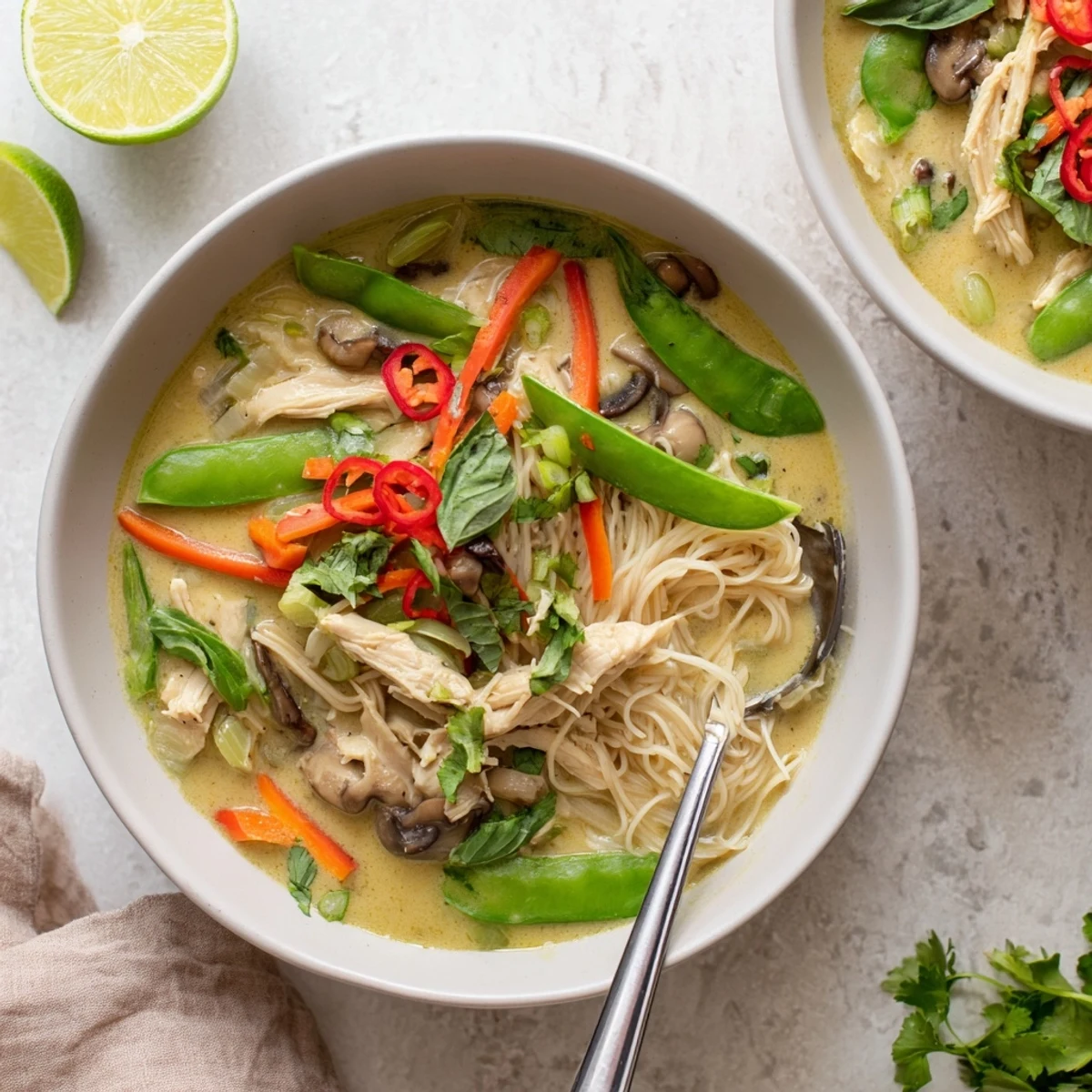
 This fragrant soup brings together tender sliced chicken, springy rice noodles, and colorful vegetables in a rich coconut-based green curry broth. The aromatic base starts with garlic, ginger, and lemongrass, while Thai curry paste infuses the soup with its signature heat and depth. Fresh lime juice brightens the creamy coconut milk, creating that perfect balance of spicy, sour, and savory that makes Thai cuisine so irresistible.
The first time I attempted Thai green curry at home, I was living in a tiny apartment with a kitchen so small I had to wedge the cutting board against the fridge. That night, the lemongrass and curry paste hit the hot oil and suddenly my cramped space felt like a street stall in Bangkok. Now this soup is my go-to when I need something that tastes like a vacation but comes together in under an hour.
My friend Mara stayed over during a particularly brutal winter, and I made this soup partly to warm us up and partly because I needed to use up vegetables wilting in my crisper drawer. She took one sip, closed her eyes, and asked if I could please make this every time she came over. That was three years ago, and its still the most requested dish at my place.
Ingredients
- 400 g boneless chicken breast or thighs: Thighs stay more tender in hot broth, but breast works if you prefer leaner meat
- 200 g rice noodles: Medium width noodles hold up better than thin ones without getting mushy
- 1 red bell pepper: Adds sweetness that balances the spice and pops beautifully against the golden broth
- 100 g sugar snap peas: They stay crisp tender instead of turning to mush like snow peas sometimes do
- 2 carrots, julienned: Cut them thin so they cook through without falling apart
- 100 g shiitake mushrooms: Their earthy flavor grounds the bright curry paste
- 1 small onion: Finely chopped so it almost melts into the broth
- 2 tbsp Thai green curry paste: Start here and add more later if you want more heat
- 2 cloves garlic: Fresh minced makes a difference over pre-minced jars
- 1 tbsp fresh ginger: Grate it directly into the pot for the most aromatic result
- 2 stalks lemongrass: Bruising them with the back of your knife releases the citrusy oils
- 750 ml chicken stock: Homemade stock adds depth, but a good quality store-bought one works fine
- 400 ml coconut milk: Full fat gives you that velvety restaurant texture
- 1 tbsp fish sauce: The secret ingredient that adds umami without making it taste fishy
- 1 tsp soy sauce: Use tamari if you need it gluten free
- Juice of 1 lime: Add this at the very end to preserve the bright acidity
- Fresh coriander and Thai basil: These are not optional for that authentic finish
Instructions
- Prep the noodles:
- Cook them according to the package, then drain and rinse immediately with cold water to stop the cooking
- Build the aromatics:
- Heat a splash of oil in your largest pot and cook the onion, garlic and ginger for 2 minutes until the smell fills your kitchen
- Wake up the curry paste:
- Stir in the curry paste and let it cook for a full minute, which helps release the essential oils
- Sear the chicken:
- Add the sliced chicken and cook just until it turns opaque on the outside
- Start the broth:
- Pour in the chicken stock, add the bruised lemongrass, and bring everything to a gentle simmer for 8 minutes
- Add the coconut and vegetables:
- Pour in the coconut milk, fish sauce, soy sauce, then add the bell pepper, carrots, mushrooms and snap peas
- Simmer gently:
- Let everything cook together for 7 to 10 minutes until the vegetables are tender but still have some bite
- Finish bright:
- Fish out the lemongrass stalks and stir in the fresh lime juice right before serving
- Assemble the bowls:
- Divide the noodles among bowls, ladle the hot soup over them, and top with generous handfuls of herbs
 Pin it
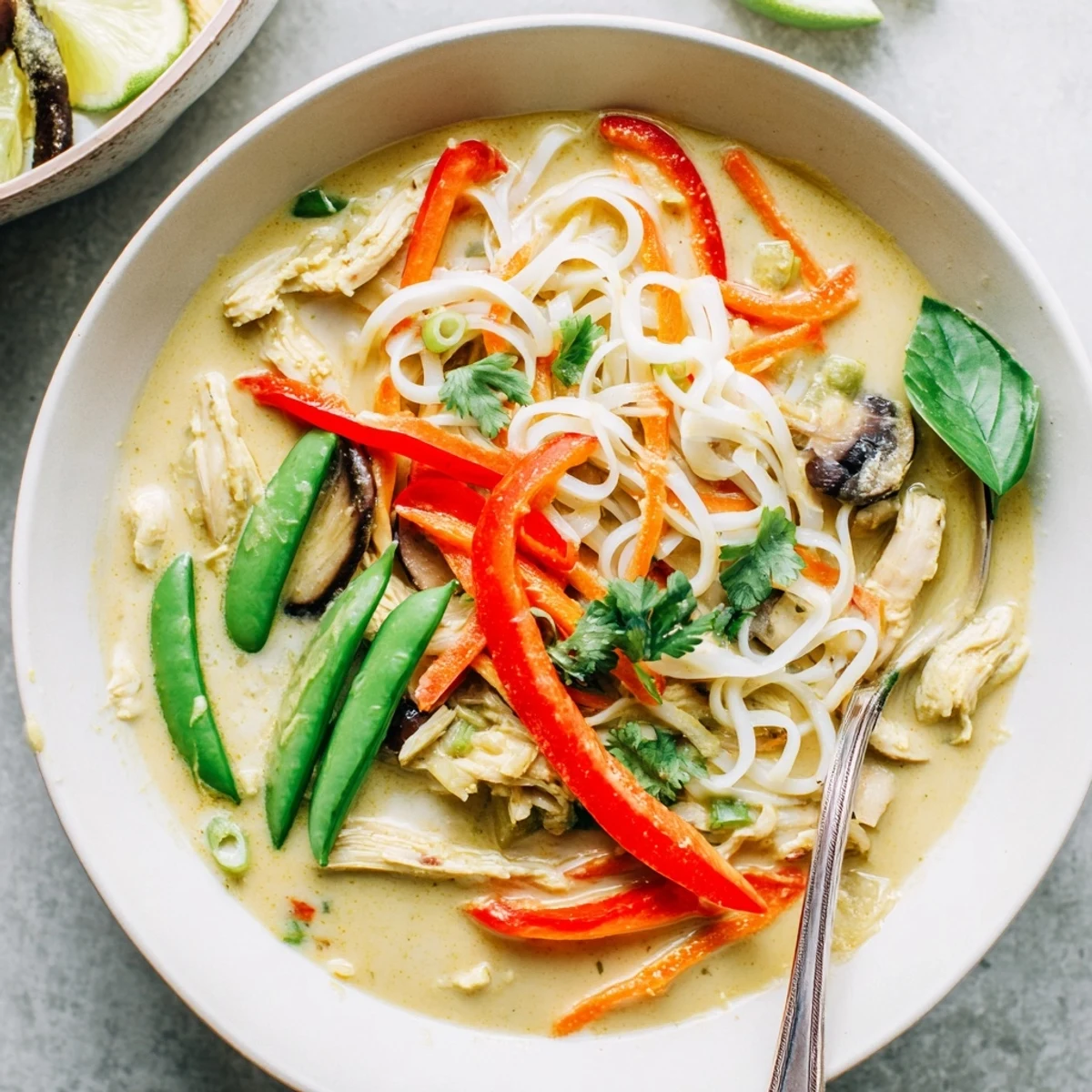
 This soup has become my comfort food of choice, especially on gray rainy days when I need something that feels like a warm hug in a bowl. My roommate now texts me from work on days she knows its on the menu, asking if there is any chance she can come home early.
Making It Your Own
I have learned that green curry paste brands vary wildly in heat and flavor profile. The first time I used an extra spicy brand, my entire family was sweating through dinner. Now I taste a tiny bit raw before adding it to the pot to gauge what I am working with.
Getting The Texture Right
The trick to this soup is timing the vegetables so nothing turns to mush. I add the carrots and mushrooms first since they take longer, then toss in the snap peas and bell pepper at the end so they keep their crunch. That contrast between silky broth and crisp vegetables is what makes each bowl satisfying.
Serving It Up
I like to set out bowls of extra garnishes and let people customize their own toppings. Some friends load up on the fresh chilies while others go heavy on the basil. It turns dinner into something interactive and fun.
- Serve with crusty bread to soak up every drop of broth
- A cold crisp lager cuts through the richness perfectly
- Make extra for lunch the next day because it reheats beautifully
 Pin it
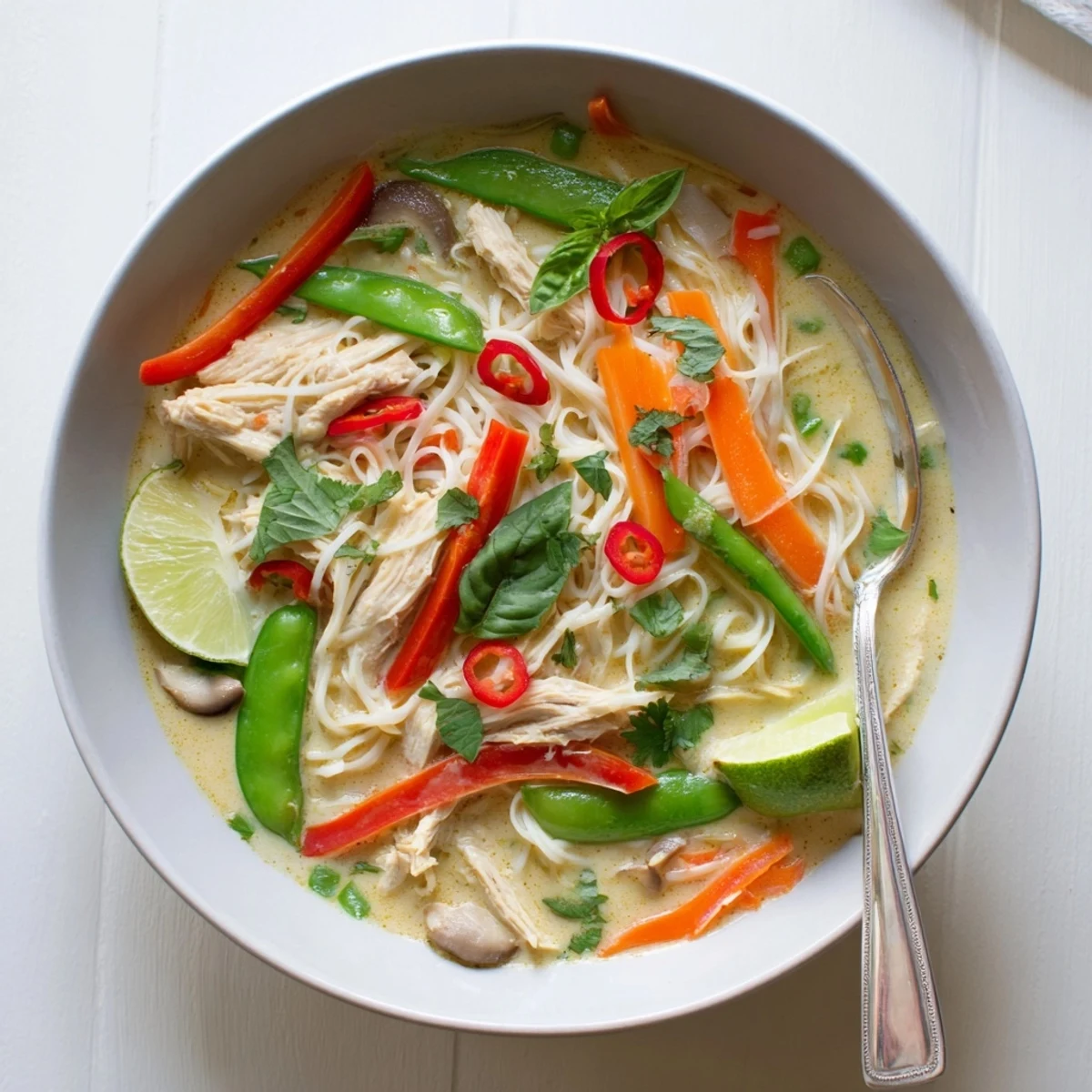
 This is the soup that proves restaurant quality Thai food is totally achievable at home, and it might just become your most requested recipe too.
Recipe Questions & Answers
- → Can I make this ahead of time?
-
Yes, prepare the broth and chicken up to 2 days ahead. Store separately from noodles to prevent them from becoming mushy. Reheat gently and add fresh garnishes before serving.
- → What vegetables work best in this soup?
-
Snap peas, bell peppers, carrots, and shiitake mushrooms add great texture and color. Baby corn, bok choy, or snow peas make excellent additions depending on what's in season.
- → How can I adjust the spice level?
-
Start with less curry paste and taste as you go—remember the flavor intensifies as it simmers. Add fresh chilies as garnish for those who want extra heat without overpowering the whole pot.
- → Can I use other proteins?
-
Shrimp cooks beautifully and takes just 2-3 minutes. Tofu works well for vegetarian versions—press and cube it first, then add when you would the chicken. Even thinly sliced beef would be delicious.
- → What type of rice noodles should I use?
-
Medium-width rice noodles work perfectly—they're substantial enough to hold up in the hot broth but still delicate. Soak them just until tender, then rinse well to stop cooking and prevent sticking.
- → Is there a substitute for fish sauce?
-
For vegetarians, use additional soy sauce or a pinch of salt with a splash of mushroom soy sauce. Miso paste can also add that savory depth, though the flavor profile will shift slightly.