
 Pin it
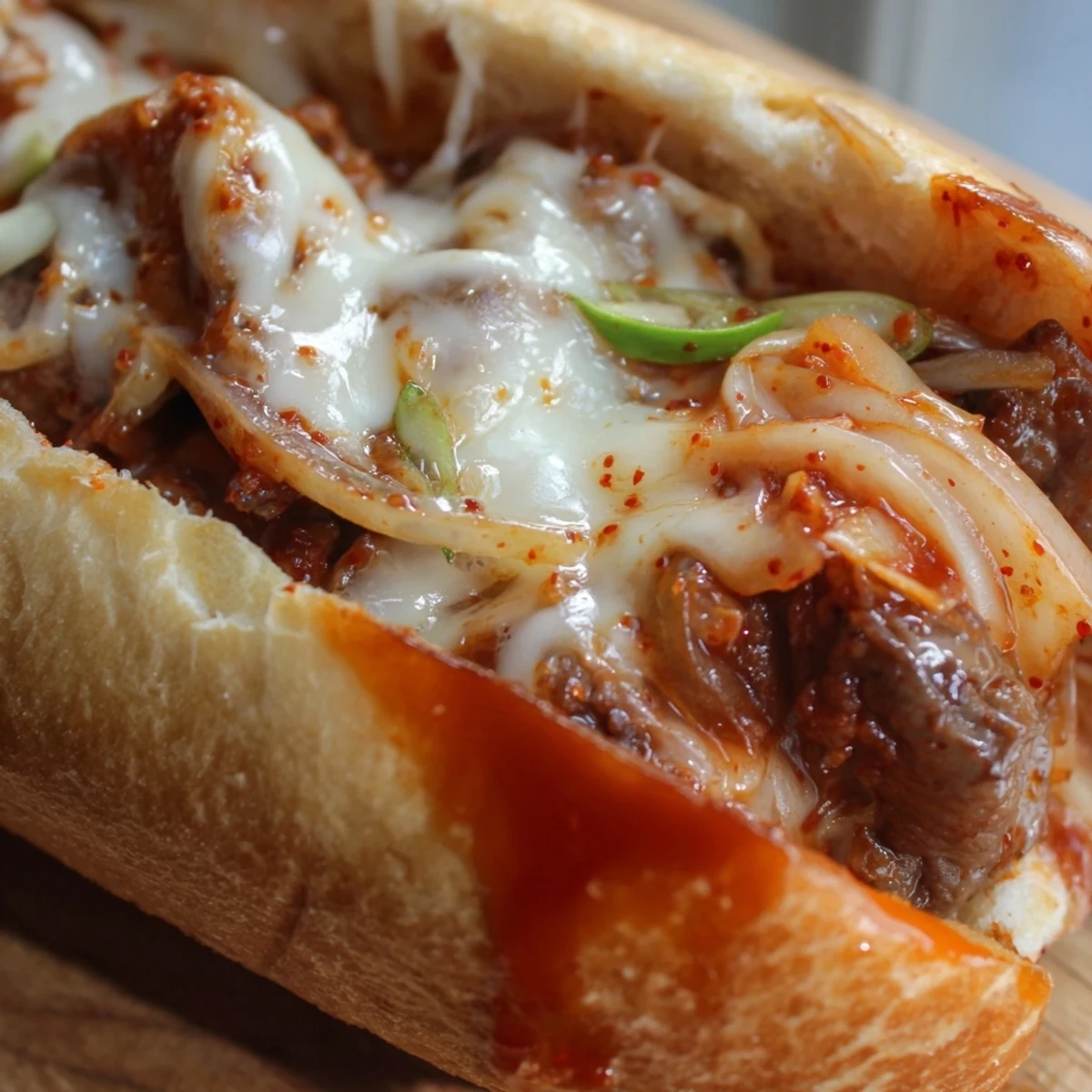
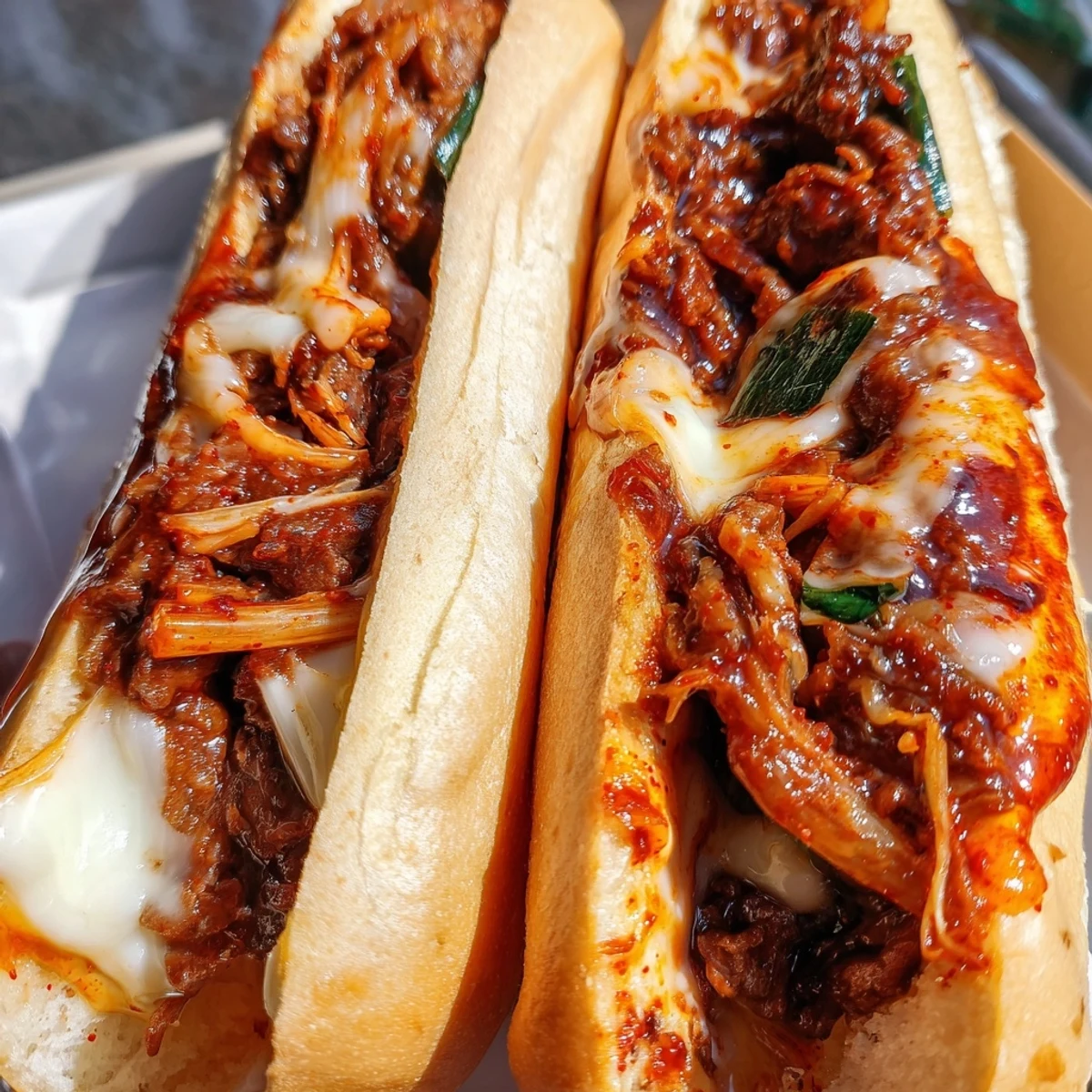
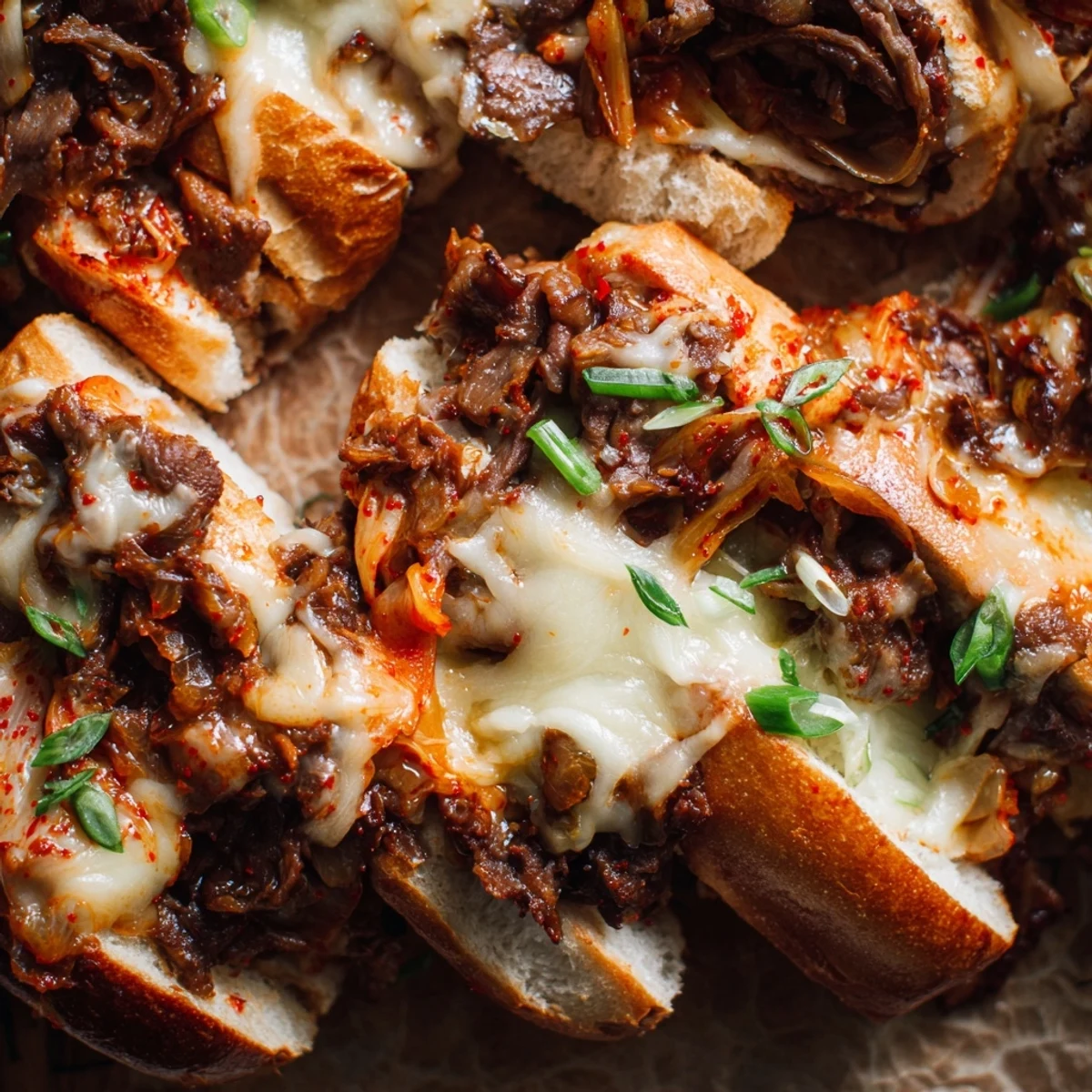
 This Korean-American fusion sandwich brings together tender marinated bulgogi beef with spicy kimchi and melted provolone cheese, all served on toasted hoagie rolls. The dish combines traditional Korean flavors with the classic American cheesesteak format, creating a mouthwatering meal that's ready in under 35 minutes.
The preparation involves marinating ribeye steak in a sweet and savory mixture of soy sauce, brown sugar, sesame oil, garlic, and ginger, then stir-frying with onions, bell peppers, and chopped kimchi. The sandwiches are assembled with the beef-kimchi mixture and cheese, then broiled until the cheese is perfectly melted and bubbly.
The first time I made these fusion sandwiches, my kitchen smelled like a Seoul street market meeting a Philadelphia corner shop. My roommate walked in mid-cook and actually stopped in his tracks, asking what kind of magic was happening on the stove. That night we ate standing up at the counter, too impatient to even bother with plates.
I served these at a small dinner party last fall, and my friend Sarah texted me the next morning demanding the recipe. She said her husband kept talking about the sandwich in his sleep. Now they make a double batch every Friday night and have officially declared it their new weekend tradition.
Ingredients
- Thinly sliced ribeye steak: The marble throughout ribeye melts during cooking, keeping each bite impossibly tender and juicy
- Soy sauce and brown sugar: This classic combo creates that perfect balance of salty and sweet that defines authentic bulgogi
- Fresh grated pear: The enzymes naturally tenderize the meat while adding subtle sweetness you cannot get from sugar alone
- Sesame oil: Just a tablespoon brings that irresistible nutty aroma that signals Korean comfort food immediately
- Well-drained kimchi: Squeeze out excess liquid or your sandwich will get soggy, but do not rinse it
- Provolone cheese: Mild enough to let the beef shine but melts into that perfect gooey blanket we all crave
- Hoagie rolls: Look for rolls with a soft interior and sturdy crust that can hold up to these generous fillings
Instructions
- Marinate the beef:
- Whisk together soy sauce, brown sugar, sesame oil, garlic, grated pear, ginger, rice vinegar and pepper in a bowl. Add the sliced ribeye and let it sit for at least 15 minutes while you prep everything else.
- Cook the beef:
- Heat your largest skillet over medium-high heat until it is screaming hot. Cook the marinated beef in batches for 3 to 4 minutes, letting it develop a nice brown crust before flipping.
- Sauté the vegetables:
- In the same pan, cook onions and bell peppers until they are soft and starting to char at the edges. Toss in the chopped kimchi and let everything get friendly for a couple minutes.
- Combine and heat through:
- Return the beef to the skillet and toss everything together. Let the flavors mingle for just a minute or two over medium heat.
- Toast the bread:
- Crank your broiler to high and split the hoagie rolls. Toast them cut-side up until golden, watching closely so they do not burn.
- Assemble and melt:
- Pile the beef mixture onto the rolls and top each with two provolone slices. Broil until the cheese bubbles and starts to turn golden brown.
- Garnish and serve:
- Sprinkle scallions and sesame seeds over the top. Add a swipe of gochujang or mayo if you want extra creaminess or heat.
 Pin it
 My dad tried these last month and called me the next day to admit he had dreamed about them. He is a traditional Philly cheesesteak purist, so hearing him say this fusion version might be better was the ultimate compliment.
Making It Your Own
My sister-in-law uses sliced portobello mushrooms instead of beef when she cooks for her vegetarian friends, and honestly, the umami from the mushrooms works beautifully with the kimchi. I have also used sharp cheddar instead of provolone when that was all I had in the fridge, and the extra tang was actually pretty fantastic.
The Bread Matters
After testing at least five different bread options, I have learned that a slightly chewy roll with a thin crust holds up best to all these juicy components. Too soft and everything falls apart, too crusty and you lose filling in every bite. Some bakery hoagie rolls are worth seeking out.
Make-Ahead Magic
The beef actually gets better after marinating overnight, so I often prep it the evening before a big gathering. You can also slice all your vegetables in advance and keep them in sealed containers.
- Warm the bread slightly before toasting if it has been sitting out
- Have all your garnishes ready before you start assembling
- Serve immediately while the cheese is at its meltiest
 Pin it
 There is something deeply satisfying about watching friends take that first bite and seeing their eyes light up. Enjoy every messy, delicious bite of this creation.
Recipe Questions & Answers
- → What type of beef works best for bulgogi?
-
Ribeye steak is ideal for bulgogi due to its marbling and tenderness. The thin slicing allows the marinade to penetrate deeply and ensures quick cooking. You can also use sirloin or flank steak, but ribeye provides the best flavor and texture.
- → Can I make this vegetarian?
-
Yes, you can substitute the beef with mushrooms or tofu. For mushrooms, use cremini or shiitake and slice them thinly. For tofu, press it well and marinate in the same mixture. You may need to adjust cooking times as these alternatives cook differently than beef.
- → How spicy is this dish?
-
The spiciness comes primarily from the kimchi and optional gochujang. Napa cabbage kimchi typically has a moderate heat level. If you prefer less spice, use milder kimchi or reduce the amount of gochujang. You can also add sliced fresh chilies for extra heat if desired.
- → What cheese alternatives work well?
-
Provolone provides excellent melting properties, but you can substitute with mozzarella for a creamier texture or American cheese for a milder flavor. Some people also enjoy using pepper jack for additional spiciness that complements the kimchi.
- → How do I prevent the bread from getting soggy?
-
Toast the rolls thoroughly under the broiler before adding the filling. You can also brush them lightly with olive oil or butter during toasting. Adding a thin layer of mayonnaise or gochujang on the inside can create a barrier and add extra flavor without making the bread soggy.