
 Pin it
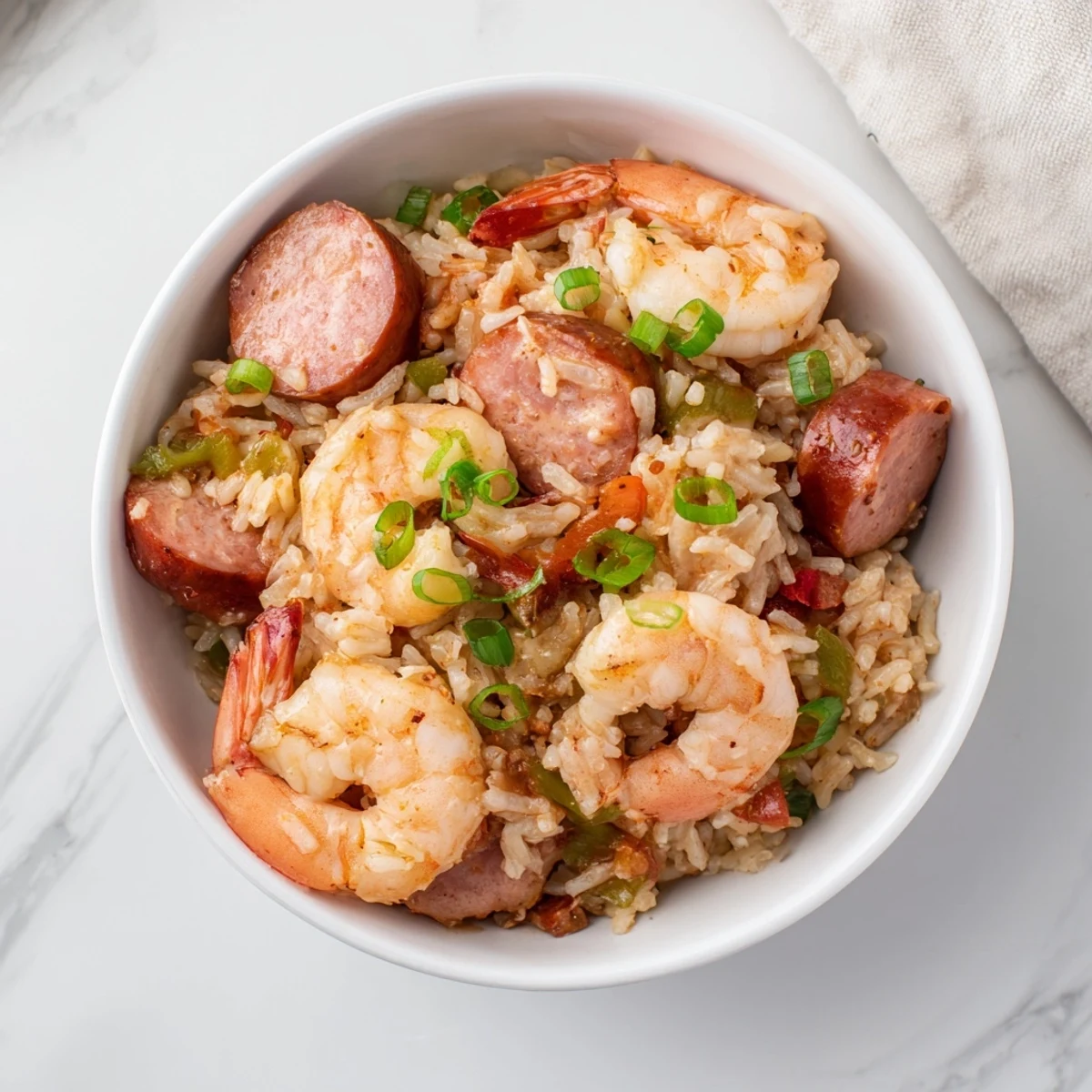
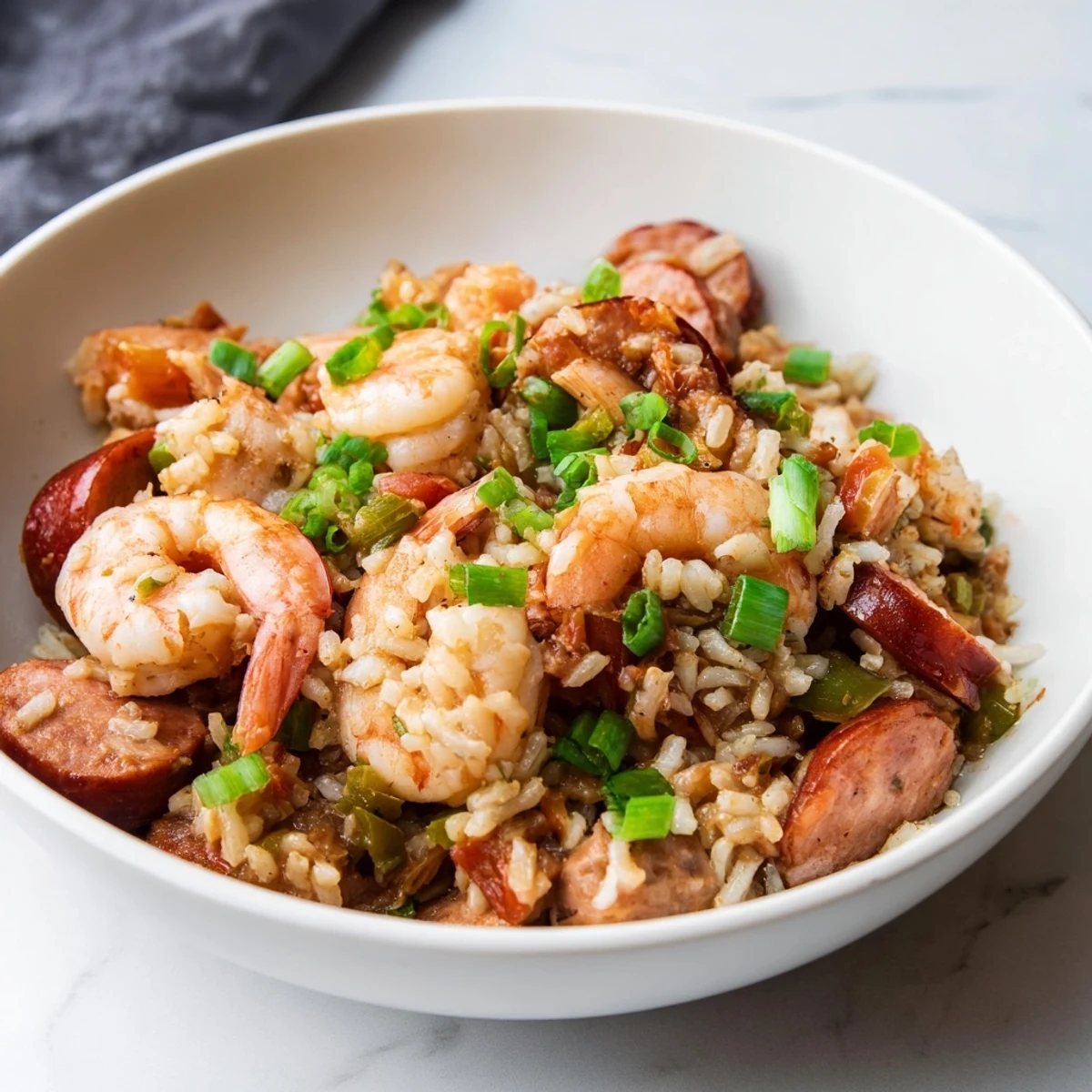
 This hearty Southern classic combines tender chicken, spicy andouille sausage, and succulent shrimp in one pot. Long-grain rice simmers in aromatic chicken broth with the holy trinity of onions, bell peppers, and celery, infused with authentic Cajun seasoning, smoked paprika, and herbs.
The dish comes together in about an hour, developing layers of flavor as each ingredient adds its character. The andouille brings smoky depth, while fresh shrimp provides a sweet contrast to the spicy seasoning blend. Everything cooks together, allowing the rice to absorb all those delicious flavors and become perfectly tender.
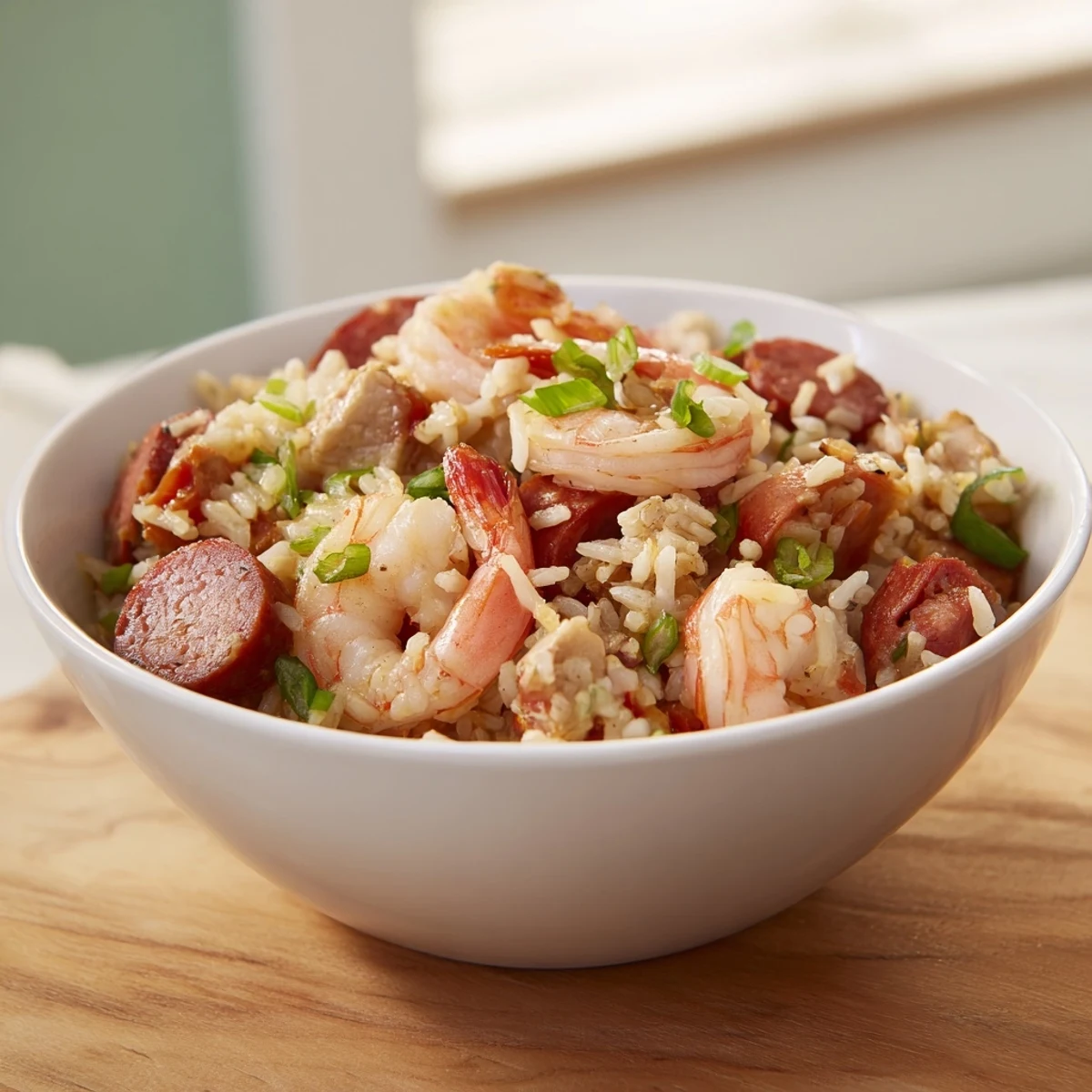
Finished with fresh scallions, parsley, and bright lemon wedges, this jambalaya serves six generously and reheats beautifully for meal prep or next-day lunches.
The first time I attempted jambalaya, I crowdeda tiny apartment kitchen with three friends who had never tasted Cajun food. We played jazz too loud and drank cheap wine while the aromas of andouille and spices filled every corner of the room. Someone accidentally doubled the cayenne, and we spent the rest of the evening passing around milk cartons between laughs. That slightly-too-spicy pot became a legendary story we still tell whenever someone mentions one-pot meals.
I made this on a rainy Sunday when my roommate came down with a nasty cold, something warm and comforting to help her feel better. She took one bite of the tender rice studded with shrimp and sausage and actually smiled for the first time in days. Now whenever the weather turns gray, she messages me asking if its jambalaya weather yet.
Ingredients
- Andouille sausage: This smoked sausage is the backbone of jambalaya flavor, look for it near other specialty sausages or substitute with any smoked pork sausage
- Boneless chicken thighs: Thighs stay juicy and tender through long simmering better than breast meat ever could
- Raw shrimp: Add these near the end so they stay plump and sweet, not rubbery from overcooking
- The holy trinity: Diced onion, bell pepper, and celery form the aromatic foundation of Cajun cooking
- Long-grain white rice: Rinse thoroughly until water runs clear to prevent gummy results
- Cajun seasoning: Homemade or store-bought, this blend typically contains paprika, garlic powder, and other spices that give jambalaya its signature kick
- Chicken broth: A good quality broth makes a difference because the rice absorbs every bit of liquid
Instructions
- Brown the proteins first:
- Crisping the sausage and chicken separately builds a flavor foundation that simmering alone cant achieve, and those browned bits left behind become part of the magic
- Sauté the vegetables:
- Let the onion, pepper, and celery soften until they release their sweetness and the kitchen smells incredible
- Build the spice base:
- Stir in the garlic briefly before adding tomatoes, rice, and all those beautiful spices so they bloom in the hot oil
- Simmer together:
- Return the meats, add broth, bring everything to a bubble, then lower the heat and let it steam covered until the rice drinks up all that spiced liquid
- Add the shrimp:
- Gently fold in the shrimp during the last few minutes so they turn pink and perfect while the rice finishes cooking
 Pin it
 This recipe traveled with me from that cramped apartment kitchen to dinner parties and potlucks across three cities. Every time someone asks for the recipe, I remember that first chaotic, wonderful night when a too-spicy mistake became a cherished memory.
Getting The Rice Just Right
Long-grain white rice works best here because it stays fluffy and separate after simmering. Short-grain varieties tend to become sticky or gummy, which ruins the texture of a good jambalaya.
Adjusting The Heat Level
Cajun food should have a gentle hum, not burn your tongue. Start with the lower amount of cayenne and taste near the end of cooking. You can always add more but you cannot take it back.
Make It Ahead
Jambalaya actually tastes better the next day when the flavors have had time to mingle and deepen. Reheat gently with a splash of broth to refresh the rice.
- Store leftovers in an airtight container for up to four days
- Freeze portions in freezer bags for quick future meals
- Always reheat covered to prevent the rice from drying out
 Pin it
 Serve this steaming hot with lemon wedges on the side and watch how quickly people gather around the table. Something about a one-pot meal full of spices and stories just brings people together.
Recipe Questions & Answers
- → What makes this dish authentic Cajun style?
-
The authentic Cajun flavor comes from the holy trinity of onions, bell peppers, and celery, combined with andouille sausage and a blend of Cajun seasoning, smoked paprika, thyme, and oregano. These traditional ingredients create the distinctive spicy, aromatic profile that defines Cajun cuisine.
- → Can I adjust the spice level?
-
Absolutely. The cayenne pepper amount can be reduced or eliminated entirely for a milder version. You can also add hot sauce during cooking or at the table for extra heat. Start with less Cajun seasoning if you prefer a gentler flavor profile.
- → What type of rice works best?
-
Long-grain white rice is traditional for jambalaya because it stays fluffy and separate during cooking. Brown rice can be used but will require additional liquid and longer cooking time. Avoid short-grain or Arborio rice, which becomes too sticky.
- → Can I make this in advance?
-
Yes, jambalaya actually tastes better the next day as flavors have time to meld. Store in an airtight container in the refrigerator for up to 3 days. Reheat gently on the stove with a splash of broth or water to prevent the rice from drying out.
- → What can I substitute for andouille sausage?
-
If andouille is unavailable, use smoked sausage, chorizo, or kielbasa. For a lighter option, turkey sausage works well. The key is choosing a smoked sausage that provides that essential smoky depth of flavor characteristic of jambalaya.
- → Why is my rice still crunchy?
-
If the rice is undercooked, add ¼ cup of hot broth or water, cover, and continue simmering for 5-10 minutes. The exact cooking time can vary depending on the specific rice brand and how tightly the lid fits. Avoid lifting the lid too frequently, which releases steam.