
 Pin it
 These bagels combine active sourdough starter with bread and whole wheat flour for deep flavor. The dough develops overnight, creating chewy texture with characteristic tang.
Caramelized onions add sweetness that balances the sourdough's natural acidity. Each bagel gets boiled in malted water before baking, ensuring that shiny crust and dense interior.
The process takes about 13 hours total, including fermentation time. Plan to make the onion topping while your dough rests during the initial rise.
The smell of caramelizing onions filling my tiny apartment on a Sunday morning is something I look forward to all week. My first attempt at sourdough bagels was honestly accidental—I had extra starter and a craving for something breakfasty. Those initial bagels were dense little pucks, but the onion flavor kept me trying. Now these chewy, tangy rounds have become my weekend ritual, perfect with cream cheese while reading the paper.
I made these for my fathers birthday brunch last month, and he honestly could not stop talking about them. Watching him take that first bite, eyes widening at the chewy texture and onion crunch, made all the kneading and waiting completely worth it. Now he requests them every time he visits.
Ingredients
- Active sourdough starter: Use starter at its peak activity, fed 4 to 6 hours before mixing, for the best rise
- Bread flour: The higher protein content creates that signature bagel chewiness
- Whole wheat flour: Adds nutty flavor and helps create a crisp crust
- Honey: Feeds the starter and helps bagels develop that golden brown color
- Yellow onions: Caramelized slowly until dark and sweet, they transform into something magical
- Barley malt syrup: This secret ingredient gives bagels that authentic bakery shine and flavor
Instructions
- Caramelize the onions:
- Heat olive oil in a skillet over medium-low heat, add sliced onions with salt, and cook slowly for 20 to 25 minutes until they turn deep brown and sweet, stirring occasionally.
- Mix the dough:
- Combine starter, warm water, and honey until dissolved, then add both flours and salt, mixing until a rough dough forms.
- Knead to development:
- Knead on a floured surface for 8 to 10 minutes until the dough feels smooth and elastic, bouncing back when pressed.
- First fermentation:
- Place dough in an oiled bowl, cover, and let rest at room temperature for 4 to 6 hours until doubled in size.
- Shape into rounds:
- Divide dough into 8 equal pieces, form each into a tight ball, then poke a hole through the center and gently stretch into a bagel shape with a 2-inch opening.
- Overnight proof:
- Let bagels rest at room temperature for 1 hour, then refrigerate overnight for 8 to 12 hours to develop flavor.
- Boil for chewiness:
- Bring water and malt syrup to a gentle boil, then cook each bagel for 45 seconds per side before placing back on the baking sheet.
- Top and bake:
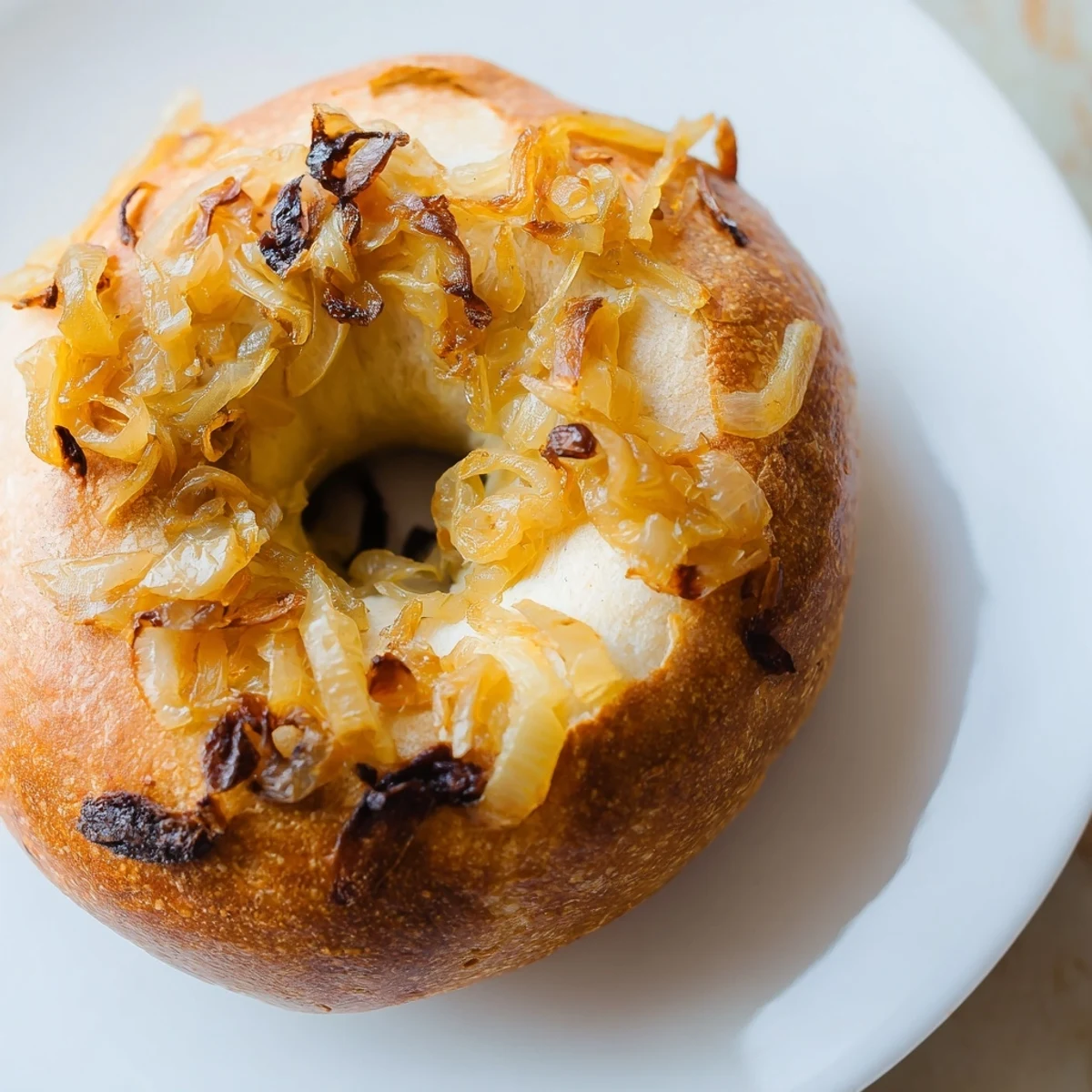
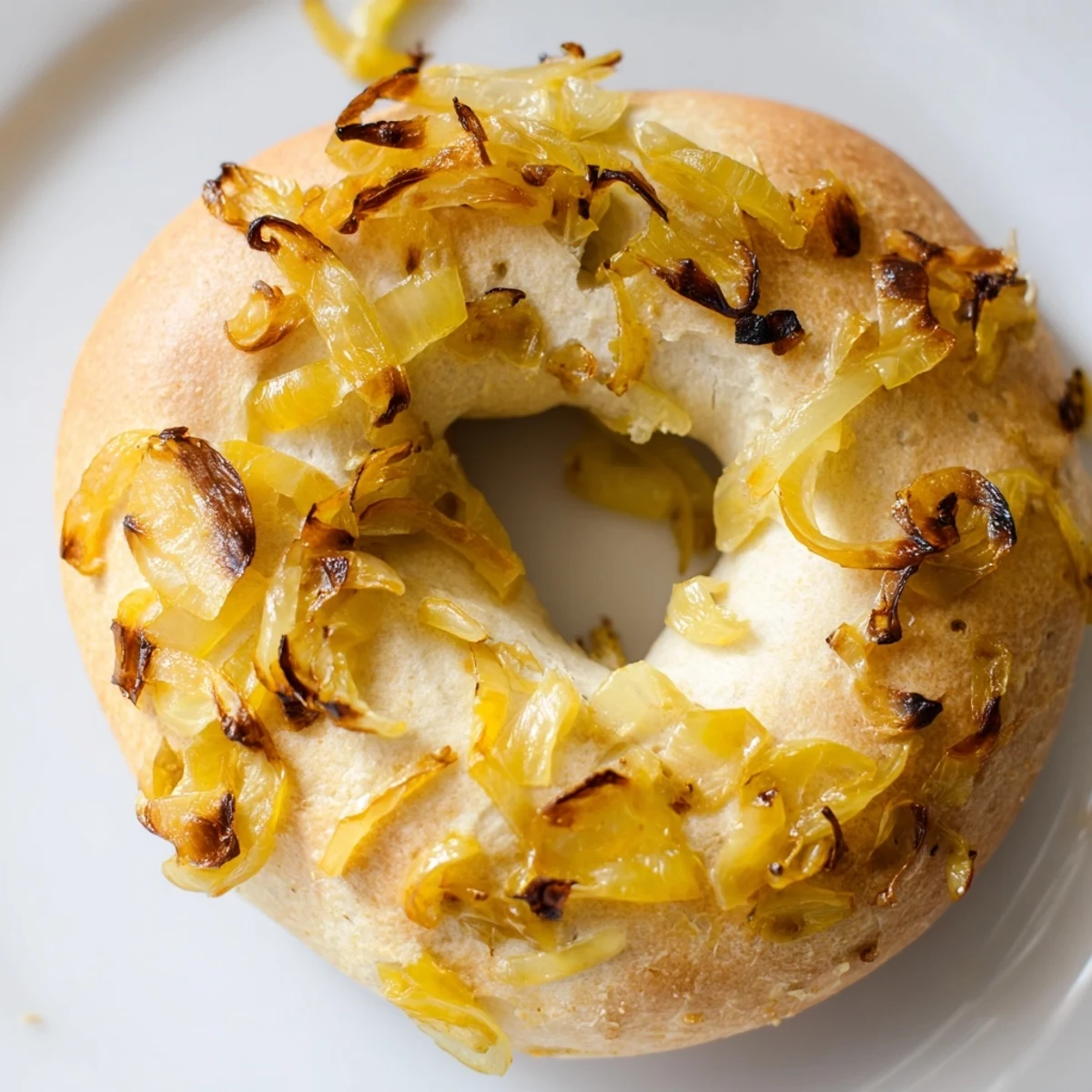
- Press caramelized onions onto the wet bagel tops, then bake at 220°C (425°F) for 20 to 25 minutes until golden brown and crisp.
 Pin it
 These bagels have become my go-to gift for new neighbors and housewarming presents. Something about handing someone a warm bagel still slightly crispy from the oven feels like offering genuine friendship.
Perfecting The Caramelized Onions
Low and slow is absolutely the key here. Rushing the onions over high heat makes them bitter instead of sweet. I usually start them while the dough is mixing, letting them work their magic alongside the fermentation process.
Getting The Texture Right
The boiling step is nonnegotiable for that chewy, glossy bagel exterior. Skipping this gives you bread shaped like a bagel, not an actual bagel. The malt syrup in the boiling water creates that professional sheen.
Storage And Freezing
Fresh bagels are obviously best within 24 hours, but freezing them extends the joy significantly. Slice before freezing so you can pop them directly into the toaster.
- Wrap individually in plastic wrap, then place in a freezer bag for up to 1 month
- Toast straight from frozen, about 2 minutes longer than fresh
- Never refrigerate bagels, as it makes them stale incredibly fast
 Pin it
 There is nothing quite like pulling these from the oven, the smell of sourdough and sweet onions filling your kitchen. Enjoy every chewy, caramelized bite.
Recipe Questions & Answers
- → What makes these bagels chewy?
-
The combination of sourdough fermentation and boiling in malted water before baking creates that signature chewy bagel texture. The long fermentation develops gluten structure.
- → Can I skip the overnight proof?
-
The overnight refrigeration develops flavor and improves texture. You can proof at room temperature for 2-3 hours instead, but you'll miss some of the depth that comes from slow fermentation.
- → What if I don't have barley malt syrup?
-
Honey works perfectly as a substitute for both the dough and boiling water. It provides similar sweetness and helps achieve that glossy finish on the crust.
- → How should I store these?
-
Keep at room temperature for 2-3 days in a sealed bag, or slice and freeze for up to a month. Toast frozen bagels directly from the freezer for best results.
- → Can I use active dry yeast instead?
-
You could substitute with instant yeast, but you'd lose the tangy flavor and extended fermentation benefits that make sourdough special. The texture would also be less complex.
- → Why boil before baking?
-
Boiling gelatinizes the surface starch, creating that distinctive shiny crust and dense interior. The malt syrup or honey adds color and enhances the crust's flavor.